How Much Sleep Do Kids Need? Ages 3–12, With Real Bedtimes
A 4-year-old needs 10–13 hours, a 5-year-old the same with no nap, a 10-year-old 9–12 — but the numbers only matter once you turn them into bedtimes. Here is the age-by-age table, the bedtime math from your child’s wake time, the signs of a sleep-short kid, and how to actually move bedtime earlier.

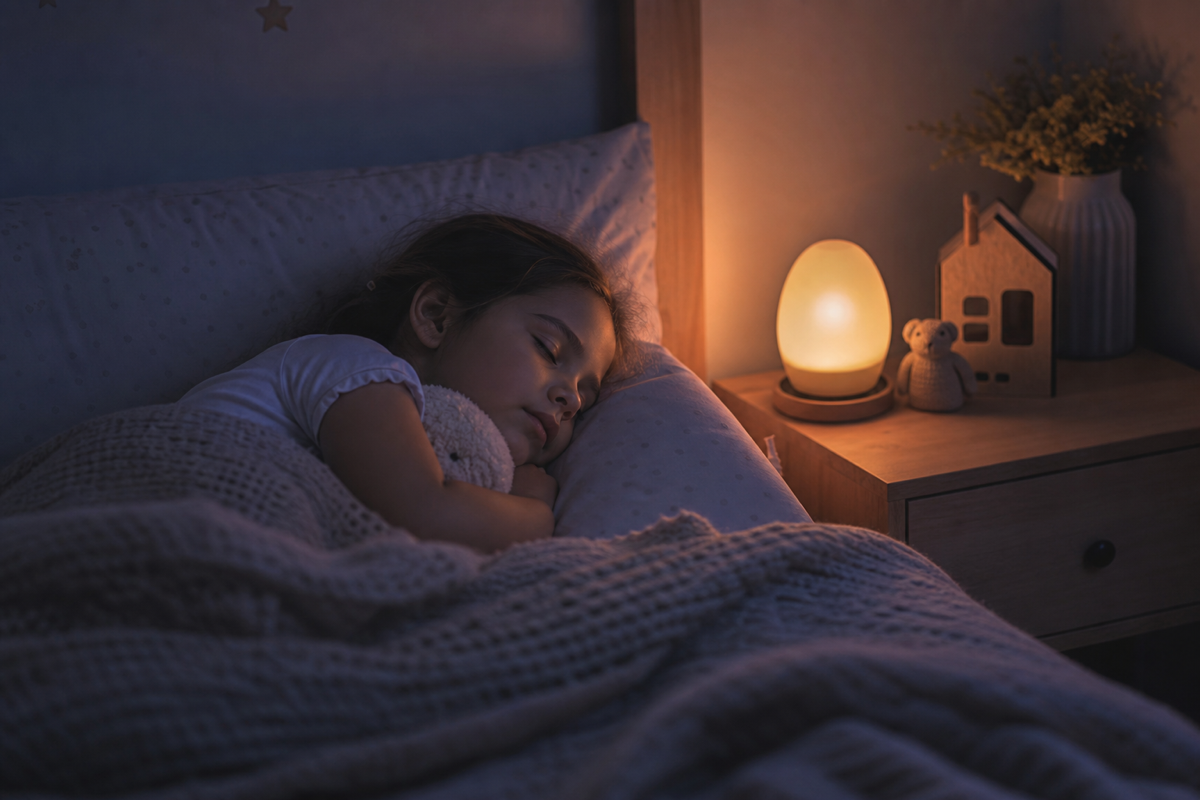
- Consensus recommendations: ages 3–5 need 10–13 hours per 24h (naps count), ages 6–12 need 9–12 hours.
- A 5-year-old typically needs 10–13 hours, now almost all at night — the nap usually ends between 3 and 5.
- A 10-year-old needs 9–12 hours; with a 7 a.m. school wake-up, that means lights out between 7:30 and 9:30 p.m.
- Sleep-short kids rarely look sleepy — they look wired, irritable, inattentive and impossible at bedtime.
- Move bedtime in 15-minute steps with a fixed wake time and a consistent wind-down; the schedule shifts in about a week.
The paediatric sleep numbers are easy to find and easy to misread. The recommendations that matter — from the consensus guidelines paediatricians use — are ranges per 24 hours, naps included, and they only become useful once you turn them into an actual bedtime for an actual child who has to be up at 7:00. Here is the table, then the math, then what to do if the math says your child is running short.
The numbers by age
Ages 3–5 (preschool): 10–13 hours per 24 hours. At 3, many children still nap an hour or so; by 5 most have dropped it, moving the whole quota into the night. So a 4-year-old who no longer naps needs the full 10–13 hours at night; a napping 4-year-old needs correspondingly less after dark. A 5-year-old almost always needs 10–13 night-time hours — for a 7 a.m. wake-up, that puts lights out between 6:00 and 9:00 p.m., with most settled children landing around 7:30–8:00.
Ages 6–12 (school age): 9–12 hours. A 10-year-old waking at 7:00 for school needs lights out between 7:30 and 9:30 p.m. — which is worth saying plainly, because a 10 p.m. bedtime for a 10-year-old, common as it is, sits outside the range entirely on a school night.
Ranges are ranges: a genuinely thriving child at the low end is fine. The tell is the daytime, not the number — more on that below.
The bedtime math
Work backwards, always from the fixed point — the morning: wake time − needed hours − 15 minutes to fall asleep = lights out. A 5-year-old who must wake at 6:45 and does best on 11 hours: 6:45 − 11h − 0:15 → in bed, lights out, by 7:30 p.m. Note that "lights out" means the end of the routine, not its start — a 30-minute wind-down means starting the bath at 7:00. (If evenings are chaos, our bedtime routine guide is the companion to this article.)
What a sleep-short child looks like
Rarely sleepy — that's the trap. Under-slept children run on stress arousal and look wired: hyper, silly and unstoppable at 8 p.m. (a cortisol second wind that parents read as "clearly not tired"), then irritable and meltdown-prone by day, struggling to focus at school, and brutal to wake in the morning. Needing to be dragged out of bed on school days but sleeping two hours later on weekends is the classic signature of a week-long sleep debt being repaid. If several of these are familiar, trial an earlier bedtime for two weeks before concluding anything else — it is the cheapest experiment in parenting.
How to actually move bedtime earlier
Fix the wake time first — same time seven days a week, within an hour on weekends; the morning anchor is what drags the evening clock along. Shift in 15-minute steps every two or three nights; a 9:30 bedtime becomes 8:30 in about a week without a single standoff. Dim the last hour: bright light — especially screens — actively pushes the body clock later and suppresses melatonin, so the hour before bed is low lamps, no tablets (the "why" is in our guide to light and sleep). Run the same wind-down every night, ending with the same quiet music: the sequence is the sleep cue, and the music is its most portable part — start our deep sleep playlist below at the books-and-lights step each night and within two weeks the opening track alone starts the yawning. Keep weekends honest: a two-hour Saturday drift is jet lag by Monday.
FAQ
How much sleep does a 4 year old need?
10–13 hours per 24 hours. If she still naps an hour, aim for roughly 10–11.5 at night; if the nap is gone, the whole 10–13 belongs to the night — for a 7 a.m. riser, that's lights out around 7:00–8:30 p.m.
How much sleep does a 5 year old need?
10–13 hours, and at this age it is almost all night-time sleep. Most 5-year-olds do best with lights out between 7:00 and 8:30 p.m. for a school-morning wake-up.
How much sleep does a 10 year old need?
9–12 hours. For a 7:00 a.m. school wake-up that means lights out between 7:30 and 9:30 p.m. — and if mornings are a battle, the earlier half of that window is the place to experiment.
Is it OK for my child to catch up on sleep at weekends?
A little recovery is fine; needing a lot every weekend means the weekday schedule is short. Big weekend lie-ins also shift the body clock later — the Monday-morning battle is partly self-inflicted jet lag. Keep weekend wake-ups within about an hour of school days.