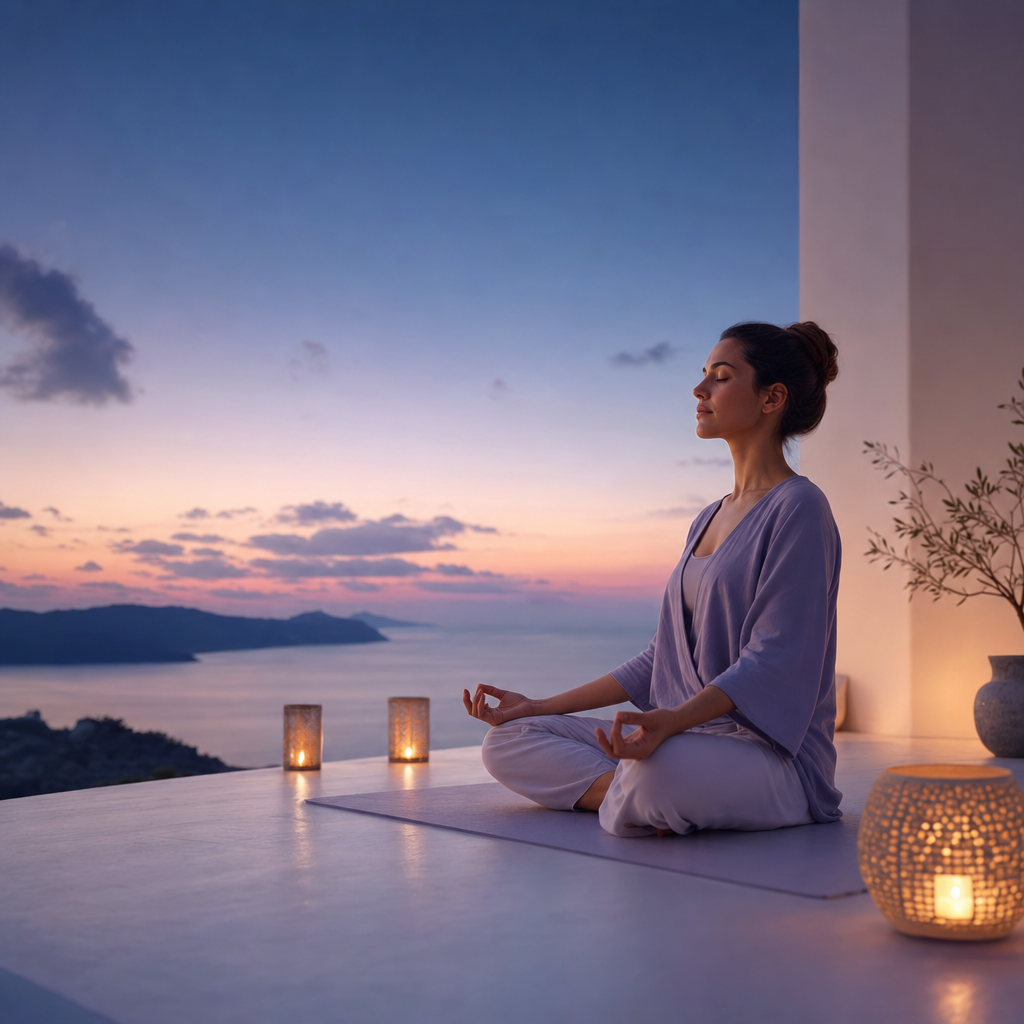
Yoga Nidra Music: Deep Rest in 40 Minutes
Yoga nidra — "yogic sleep" — is a guided practice that gives you deep, sleep-like rest while awake. This guide explains what yoga nidra music is, why it works like non-sleep deep rest (NSDR), and how to use it for sleep, anxiety and recovery.

- Yoga nidra means "yogic sleep" — a guided practice that brings you to the edge of sleep while remaining aware.
- It is closely related to NSDR (non-sleep deep rest), a term popularised for its restorative effect on the brain and body.
- Practitioners report that a 20–40 minute yoga nidra session can feel as restful as several hours of sleep.
- Spacious, slow instrumental music helps hold the body in stillness and covers distracting background noise.
- Yoga nidra is used for insomnia, anxiety, burnout recovery and post-exercise relaxation.
Yoga nidra — Sanskrit for "yogic sleep" — is a guided relaxation that takes you to the threshold of sleep while you stay gently aware. Paired with the right music, it delivers deep, restorative rest in as little as 20–40 minutes. This guide covers what yoga nidra music is, why it works, and how to use it whether you want better sleep, less anxiety, or a mid-day reset.
What is yoga nidra?
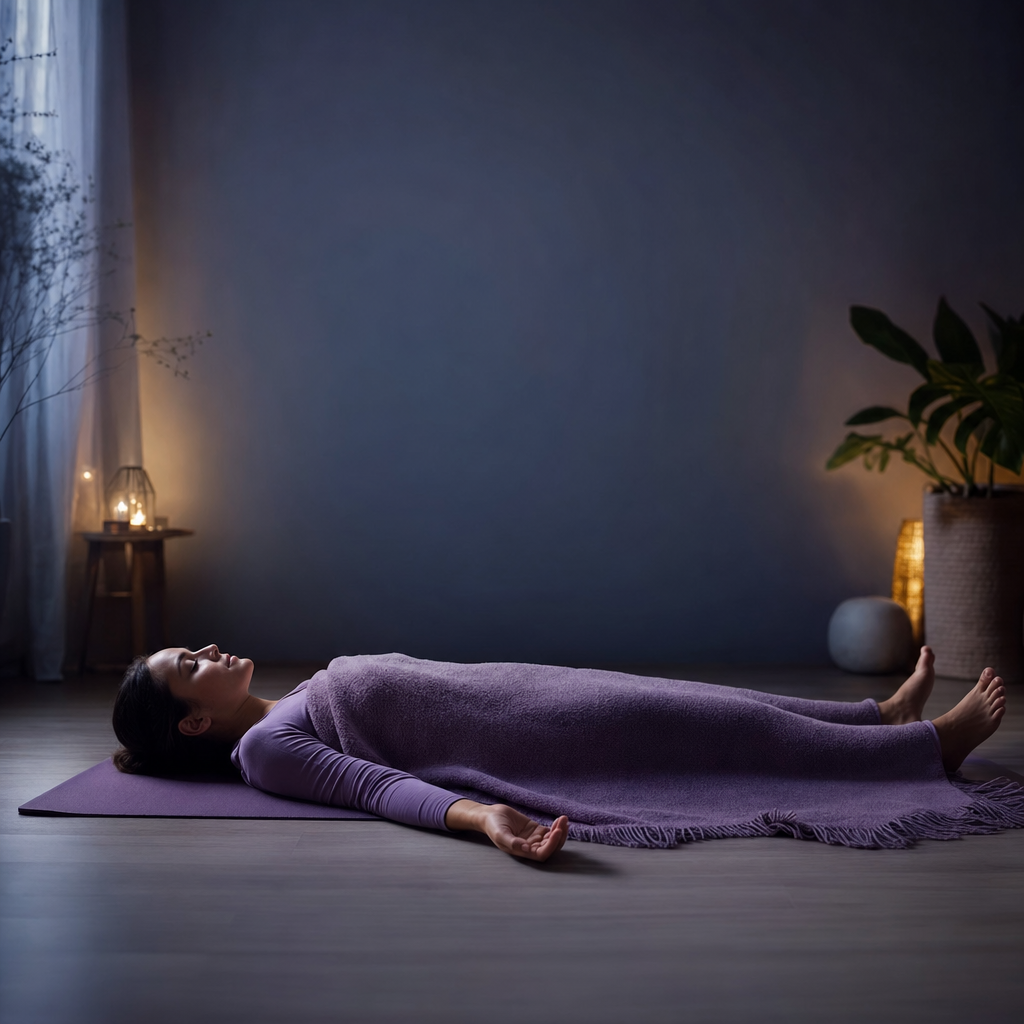
Yoga nidra is a lying-down practice, usually in savasana (flat on your back), in which a voice or a sequence of cues guides your attention through the body and breath. You are not asleep and you are not fully awake — you rest in a hypnagogic, deeply relaxed state where the nervous system downshifts and the mind grows quiet.
Yoga nidra and NSDR
You may have heard the term NSDR — non-sleep deep rest. It describes the same family of practices: deliberate, guided rest that restores you without actually sleeping. Yoga nidra is the traditional form; NSDR is the modern, secular label. Both aim to give your brain and body a genuine recovery window on demand.
Why music matters in yoga nidra
Music does three things in a yoga nidra session. First, it covers distracting sound — traffic, housemates, a ticking clock — so your attention stays inward. Second, its slow tempo entrains your breathing and heart rate, guiding them downward. Third, spacious, unresolved tones create a sense of timelessness that helps you let go of the urge to "do" anything.
The best yoga nidra music is instrumental, slow, and free of sudden changes. Our Yoga Nidra playlist is built from spacious 432 Hz soundscapes designed to hold you in stillness for a full session.
How to use yoga nidra music
1. Lie down and get warm. Body temperature drops as you relax, so use a blanket. Dim the lights.
2. Start the music and set a soft intention. Something simple: "I am allowed to rest."
3. Scan your body slowly. Move your attention from your feet to your head, releasing each part. Let the music carry the pace.
4. Let awareness float. If you drift toward sleep, that is fine. The goal is rest, not performance.
When to practise
Yoga nidra works beautifully before bed as a bridge into deep sleep, in the afternoon to counter an energy slump, or after intense exercise or stress. Even 15 minutes counts.
Frequently asked questions
Is yoga nidra as good as sleep?
It is not a full replacement for a night's sleep, but many practitioners find a 20–40 minute session leaves them feeling as refreshed as a much longer nap. It is especially useful when you are too wired to sleep but need to recover.
Can I do yoga nidra to fall asleep?
Yes. Although the traditional aim is to stay aware, using yoga nidra music at bedtime is a popular way to drift off, because it relaxes the body and quiets the mind at the same time.
What is the best music for yoga nidra?
Slow, spacious, instrumental music with no lyrics and no abrupt changes. Long, sustained tones tuned to 432 Hz are a favourite because they feel warm and grounding and never pull your attention outward.
How is yoga nidra different from meditation?
Most meditation is done sitting up with focused attention; yoga nidra is done lying down and is far more passive. You are guided into rest rather than actively concentrating, which makes it accessible even on days when meditation feels impossible.