Fear of Sleep (Somniphobia): Why Bedtime Feels Threatening and How to Rebuild Trust
Fear of sleep — somniphobia — turns the bed into a threat: racing heart at lights-out, bargaining with tiredness, dreading the moment of letting go. It is usually learned, from panic, nightmares, sleep paralysis or loss of control — and it can be unlearned. Here is why it happens and a gentle protocol for making sleep feel safe again.

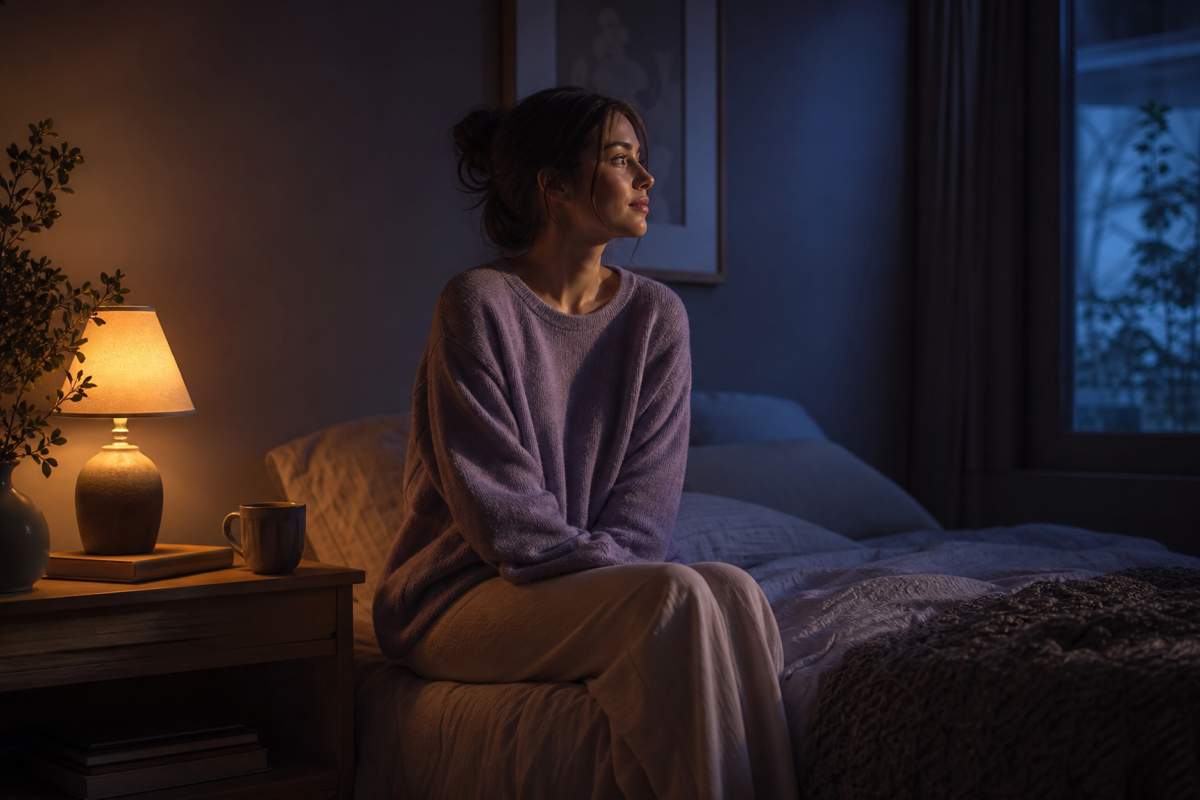
- Somniphobia is fear of sleep itself — of losing control, of nightmares, of not waking — and it is distinct from insomnia, though it causes plenty of it.
- It is usually learned: sleep paralysis, panic attacks at night, trauma, recurring nightmares or health scares teach the brain that unconsciousness is unsafe.
- Avoidance (staying up "just a little longer") relieves the fear tonight and feeds it tomorrow — the standard anxiety loop.
- Rebuilding safety works through the body: a fixed wind-down, warm dim light, steady sound as a companion signal, and staying with the fear in small doses instead of fleeing it.
- Persistent somniphobia responds very well to professional treatment (CBT, and imagery rehearsal for nightmares) — needing help with it is normal, not dramatic.
Everyone else complains they can't get to sleep. Your problem is stranger and lonelier: part of you doesn't want to. As bedtime approaches, something tightens — the heart speeds up at lights-out, you keep finding one more thing to do, and the moment of actually letting go feels like stepping off an edge. That is fear of sleep — somniphobia — and the first thing worth knowing is that it makes perfect sense once you see how it is learned. The second is that it can be unlearned.
Why a brain learns to fear sleep
Nobody is born afraid of sleeping. The fear is almost always a conclusion the threat system drew from evidence: a night of sleep paralysis (waking unable to move, often with hallucinated presence — harmless, terrifying); panic attacks that struck at night or on the edge of sleep; recurring nightmares or trauma that replays after dark; a health scare — yours or someone else's — that attached danger to unconsciousness ("what if I don't wake up?"); or for some people simply the loss of control itself, the vigilant mind's horror at going offline. In every case the logic is the same: something bad happened in or near sleep, so the alarm system now fires at the approach of sleep. The fear is not irrational — it is a smoke detector that learned the wrong lesson.
The loop that keeps it alive
Fear of sleep sustains itself two ways. Avoidance: staying up later "just until I'm exhausted" relieves the dread tonight — and confirms to the brain that bedtime was indeed a threat worth avoiding, making tomorrow's dread slightly stronger. It also produces sleep deprivation, which raises anxiety, worsens nightmares and makes sleep paralysis more likely — manufacturing fresh evidence for the fear. Vigilant falling-asleep: monitoring yourself for the moment of drop-off ("is it happening? is my heart okay?") keeps arousal exactly high enough to prevent the drop-off, turning bed into a nightly standoff. Breaking the loop means interrupting both: approaching sleep instead of fleeing it, and giving the vigilant mind something better to do than watch.
Rebuilding safety, step by step
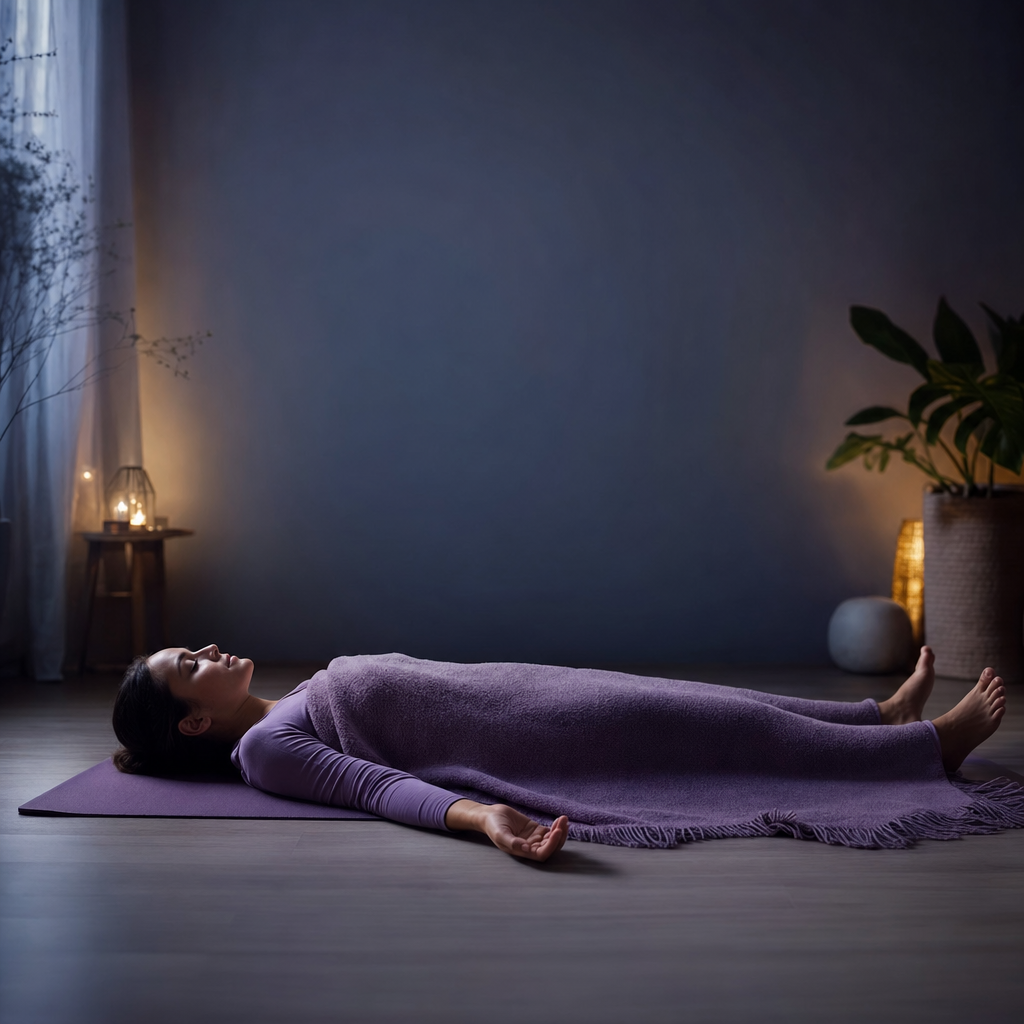
1. Make the bedroom read as safe before it reads as sleep. Warm dim lamp, tidy bed, comfortable temperature — and spend some waking, pleasant time there (reading, stretching) so the room stops being exclusively the arena where the scary thing happens.
2. Install a fixed wind-down. The same 30-minute sequence nightly — shower, lamp, stretch, bed. Predictability is the nervous system's first language of safety; a routine tells the body what happens next so it doesn't have to brace. (Our falling-asleep guide pairs well here.)
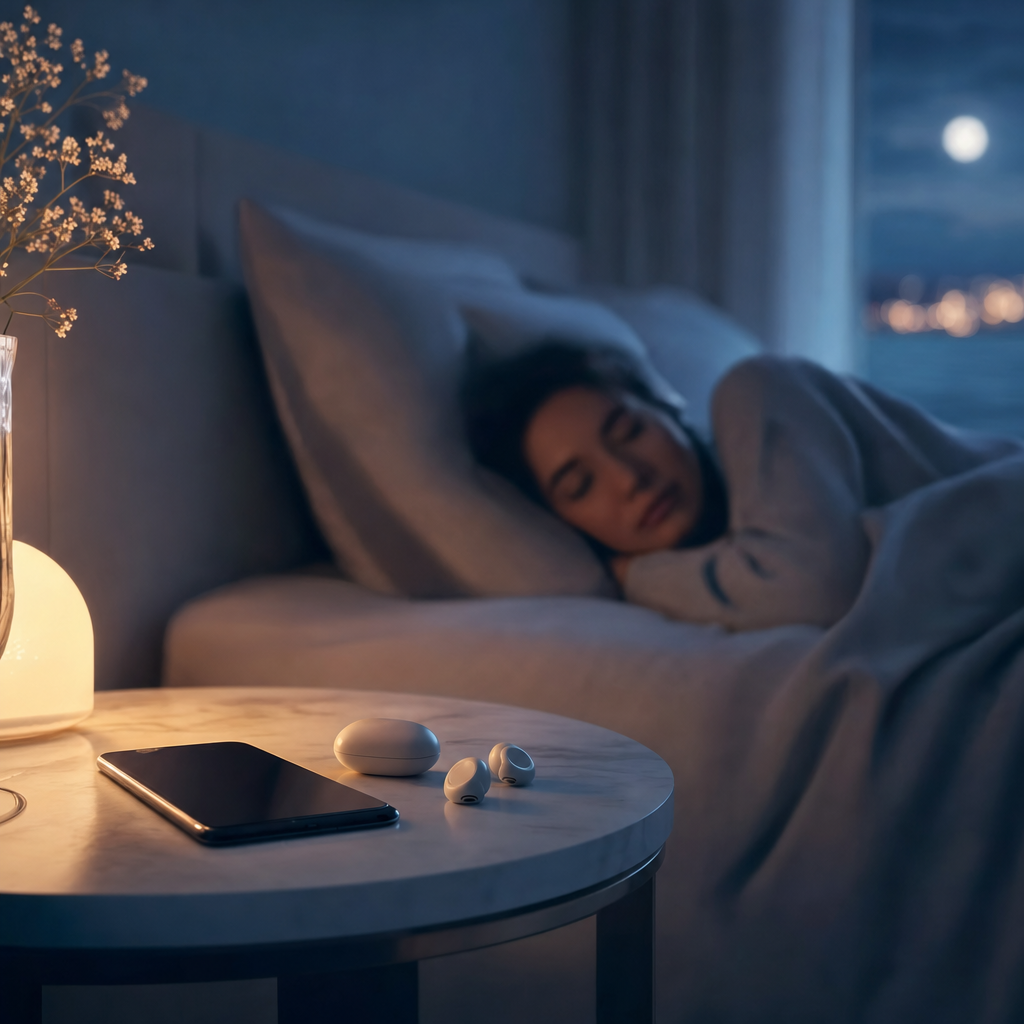
3. Give the night a companion sound. Silence is where a vigilant mind does its best catastrophising, and it is also acoustically empty — every creak stands out. A steady, warm, quiet soundtrack does three jobs at once: it occupies the monitoring mind (something gentle to rest attention on instead of the heartbeat), it masks the noises that spike vigilance, and — used nightly — it becomes a conditioned safety cue, the audio equivalent of a hand on the shoulder. Slow wordless music at low volume, started at the beginning of the wind-down and left running, is exactly what the playlist below is composed for; people with night-time fear often report the continuity itself ("the music is still there") is what lets them let go.
4. Approach in doses, don't flee. When the wave of dread arrives at lights-out, the move that retrains the alarm is counterintuitive: stay, soften, and let it crest without escaping to the phone or the living room. Slow the exhale (in 4, out 6–8), put a hand on the chest, name it once — "this is the fear, it passes" — and let the body discover, repeatedly, that nothing follows. Each tolerated wave recalibrates the detector a little; every escape re-arms it.
5. Handle the specific trigger. Sleep paralysis: it is harmless, more likely on your back and when sleep-deprived — side-sleeping and a regular schedule reduce episodes, and knowing what it is removes most of its teeth. Nightmares: writing a changed, neutral ending to the recurring dream and rehearsing it by day (imagery rehearsal) is a genuinely effective, well-studied technique. Night panic: the exhale-led breathing above, practised by day so it is available at 2 a.m.
When to bring in a professional
If fear of sleep is costing you most nights, or it grew from trauma, or nightmares are frequent and violent — this is a treatable, well-understood problem that therapists handle all the time. CBT for insomnia and anxiety, and imagery rehearsal therapy for nightmares, have strong track records; a GP or therapist is a right and normal next step, not an admission of drama. This article is support and information, not a substitute for that care.
FAQ
What causes somniphobia?
Usually a learned association: sleep paralysis, night panic attacks, trauma, recurring nightmares, or health fears that attached danger to unconsciousness. The brain concluded sleep is unsafe and now sounds the alarm as bedtime approaches.
How do I stop being scared of falling asleep?
Reverse the avoidance gently: a fixed calming wind-down, a warm dim safe-feeling bedroom, a steady quiet soundtrack as a companion signal, and staying with the fear in small tolerable doses (slow exhales, hand on chest) instead of escaping it. Persistent cases respond very well to CBT.
Can music really help with fear of sleep?
As a support, yes: continuous gentle sound occupies the vigilant mind, masks the noises that spike alarm, and becomes a conditioned safety cue with nightly use. It works alongside the behavioural steps, not instead of them.