How to Fall Asleep Fast: Music and Habits That Actually Work
If your mind races the moment your head hits the pillow, you can train yourself to fall asleep faster. This guide covers evidence-based habits and the kind of music that helps you drop off in minutes instead of hours.

- Most healthy adults fall asleep in 10–20 minutes; lying awake much longer often signals a mind that is too activated.
- Slow, lyric-free music lowers heart rate and gives a racing mind a gentle anchor, shortening the time it takes to drift off.
- A slow, exhale-focused breathing pattern (such as 4-in, 6-to-8-out) triggers the parasympathetic "calm" response.
- A cool, dark, screen-free room and a consistent bedtime make falling asleep fast far easier.
- If you are still awake after about 20 minutes, getting up briefly and returning when sleepy prevents the bed becoming a place of frustration.
Lying awake with a racing mind is exhausting. The good news: falling asleep fast is a skill you can train, and calm music is one of the most effective tools for it. This guide walks through the habits and the kind of listening that help you drop off in minutes instead of staring at the ceiling.
Why can't I fall asleep quickly?
Most healthy adults fall asleep within 10–20 minutes. If it regularly takes much longer, the usual culprit is an over-activated nervous system — a mind still processing the day, a body still in low-grade fight-or-flight. Bright screens, late caffeine, stress and an irregular schedule all keep that activation high.
The fix is not to try harder to sleep — effort backfires. It is to lower your arousal so sleep can arrive on its own.
How music helps you fall asleep fast
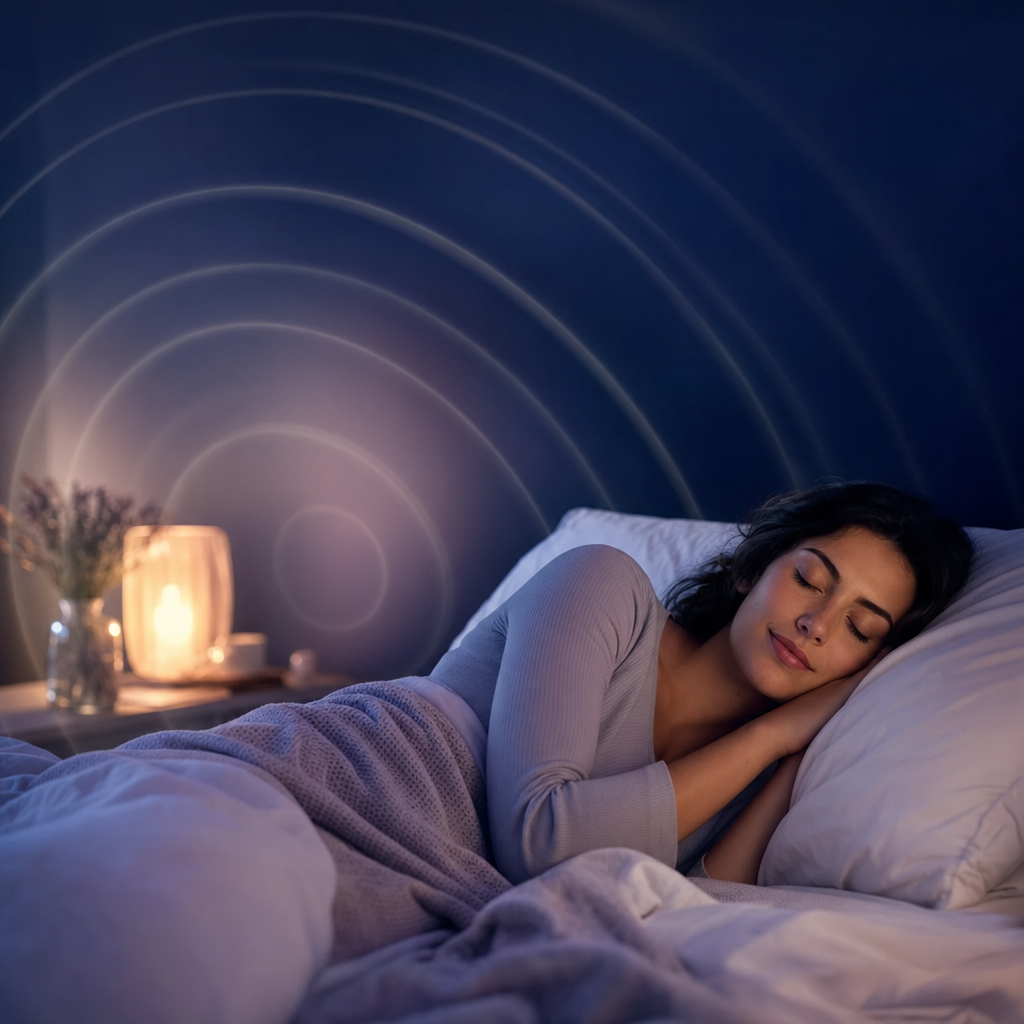
Slow, lyric-free music does two things at once. It gives your busy mind a gentle anchor to rest on instead of your to-do list, and its slow tempo pulls your heart rate and breathing down toward a sleep-ready state. Because there are no words, it does not keep your language centres engaged.
Our Fall Asleep Fast playlist is designed for this exact moment: calm 432 Hz frequencies that slow a racing mind from lights-out to sleep.
A 3-step wind-down to fall asleep fast
1. Set the scene
Cool the room, make it dark, and put screens away at least 20 minutes before bed. Start your sleep music quietly so the room already feels calm when you lie down.
2. Breathe out slowly
Inhale gently for four counts, exhale for six to eight. Long exhales activate the vagus nerve and the parasympathetic "calm" system. Let the music set the pace so you do not have to count rigidly. (More on this in our guide to the vagus nerve reset.)
3. Let go of trying
Rest your attention on the music and the feeling of the exhale. If thoughts come, that is normal — gently return to the sound. You are not trying to make sleep happen; you are removing the obstacles so it can.
If you are still awake
If about 20 minutes pass and you are wide awake and frustrated, get up, keep the lights low, and do something calm — including simply listening to music in a chair — until you feel sleepy, then return to bed. This keeps your brain from associating the bed with lying awake.
Frequently asked questions
What is the fastest way to fall asleep?
Lower your arousal: a dark, cool, screen-free room, slow exhale-focused breathing, and quiet lyric-free music. Trying to force sleep tends to delay it — the goal is to relax and let it come.
What music helps you fall asleep fast?
Slow, instrumental, low-frequency music without lyrics or sudden changes. Something soothing enough to fade into the background and slow enough to bring your heart rate down, such as 432 Hz sleep soundscapes.
Why do I fall asleep faster with music?
Calm music gives a racing mind something gentle to focus on and slows your breathing and heart rate, both of which reduce the mental and physical activation that keeps you awake.
How long should it take to fall asleep?
Around 10–20 minutes is typical and healthy. Falling asleep the instant you lie down can be a sign of sleep deprivation, while regularly taking far longer than 20 minutes may point to too much bedtime arousal or an underlying sleep issue.