What Does 432 Hz Do to Your Brain?
Can a tuning frequency really affect your brain? This guide separates what 432 Hz music actually does — calming your nervous system and lowering arousal — from the myths, and explains how to use it for relaxation and sleep.


- Music affects the brain mainly through emotional and arousal pathways, not by "retuning" brain cells to a specific frequency.
- Calming music like 432 Hz can lower physiological arousal — slowing heart rate and easing the stress response.
- Slow, soothing music promotes relaxed states associated with alpha and theta brain activity, which support calm and sleep onset.
- Claims that 432 Hz specifically repairs or "tunes" the brain are not supported by strong evidence.
- The genuine brain effect is relaxation: less tension, a quieter mind and an easier transition toward sleep.
It is a great question: can music tuned to 432 Hz actually change what happens in your brain? The honest answer is yes — but not in the mystical way it is sometimes described. 432 Hz music affects your brain the way all calming music does: by lowering arousal and shifting you toward relaxation. Here is what that really means.
How music affects the brain
When you listen to music, your brain processes it through networks tied to emotion, memory, attention and the body's stress response. Slow, gentle, predictable music signals safety. In response, the nervous system can lower your heart rate, slow your breathing and reduce the release of stress hormones. This is a real, measurable effect — and it is about the character of the music, not a magic number.
What 432 Hz does — and does not — do
A common myth is that a 432 Hz tone "retunes" your brain cells or resonates with them at that exact frequency. That is not how hearing or neurons work. What 432 Hz music does do is sound warm, soft and unhurried — and that calming quality is what nudges your brain toward a relaxed state.
The brain states behind relaxation
Your brain produces electrical activity at different speeds, and calmer states are linked to slower activity. Relaxed wakefulness is associated with alpha waves; the drowsy, meditative edge of sleep with theta waves. Soothing music helps you drift from busy, alert states toward these calmer ones — which is exactly what you want before sleep or during meditation. (For the deepest stage, see our guide to delta waves for sleep.)
Why this matters for calm and sleep
The practical takeaway is simple: 432 Hz music can genuinely help your brain settle. By lowering arousal it eases anxiety, quiets mental chatter and smooths the path into sleep. That is why it works so well for nervous system regulation and winding down — no mysticism required. If you want the fuller comparison, see 432 Hz vs 440 Hz.
How to use it
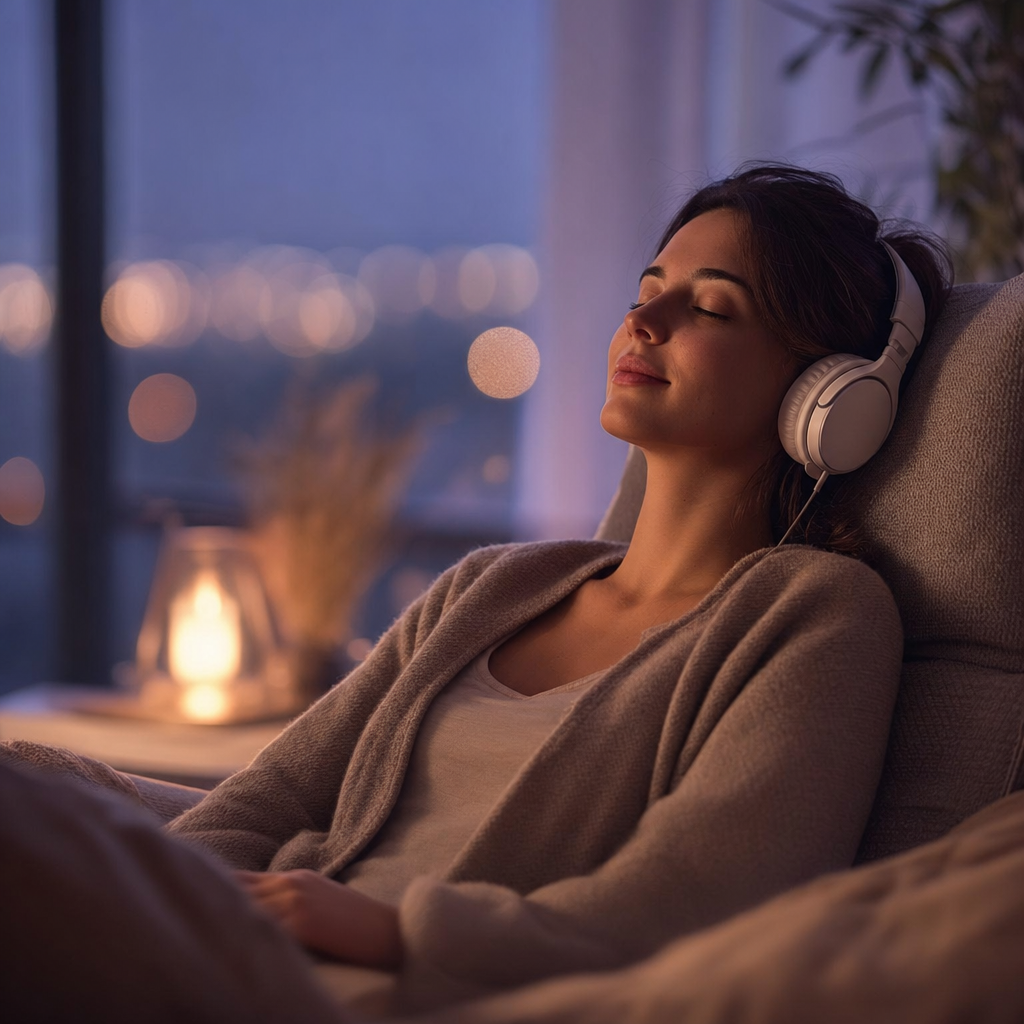
Play calm 432 Hz music at a low volume, ideally lyric-free, as part of a consistent relaxation or bedtime routine. Pair it with slow, exhale-focused breathing to deepen the effect. Give it 10–20 minutes and let your attention rest on the sound.
Frequently asked questions
Does 432 Hz really affect the brain?
Yes, but through relaxation, not "retuning." Like any calming music, 432 Hz can lower your heart rate and stress response and shift you toward relaxed brain states — it does not resonate with or repair brain cells.
Can 432 Hz reduce anxiety?
It can help. Slow, warm, soothing music lowers physiological arousal, which eases the physical symptoms of anxiety such as a racing heart and shallow breathing. It is a helpful tool, not a treatment for an anxiety disorder.
Does 432 Hz help you sleep?
Yes. By calming the nervous system and reducing mental activation, 432 Hz music makes it easier to drift from alert wakefulness toward the drowsy, theta-rich state that precedes sleep.
Is 432 Hz safe to listen to?
Completely. It is ordinary music at a slightly lower tuning. Listen at a comfortable volume for as long as you like.