Sleep Music for Anxiety: Quiet a Racing Mind at Night
When anxiety keeps you awake, the right sleep music can calm your body and quiet your thoughts. This guide explains how it works, what to listen to, and how to build a calming bedtime routine.

- Night-time anxiety keeps the nervous system in fight-or-flight, making sleep hard.
- Slow, soft, lyric-free music lowers arousal and gives an anxious mind a gentle anchor.
- Music pairs powerfully with slow, exhale-focused breathing to calm the body.
- A consistent, calming bedtime routine trains the brain to wind down.
- For persistent anxiety, music supports but does not replace professional care.
There is a particular kind of exhaustion in lying awake while your mind races. When anxiety keeps you up, calming sleep music is one of the gentlest, most effective tools to reach for. This guide explains how it helps, what to listen to, and how to build a routine around it.
Why anxiety makes sleep so hard
At night, with distractions gone, an anxious mind gets loud — replaying the day, forecasting tomorrow. That keeps the nervous system in fight-or-flight: fast heart, shallow breath, tense body. You cannot force sleep in that state; you have to lower the arousal first. That is exactly what calming music helps you do.
How sleep music calms anxiety
Slow, soft, lyric-free music does two things at once: it gives your racing mind a gentle anchor to rest on instead of your worries, and its slow tempo pulls your heart rate and breathing down toward a sleep-ready state. Warm 432 Hz soundscapes are especially soothing — our Cortisol Detox playlist is built to lower stress at the end of the day. It works well alongside a vagus nerve reset.
A calming bedtime routine
“Anxiety at midnight is just your day, unfinished. Music helps you set it down until morning.”
Start the music 20–30 minutes before bed, dim the lights and put screens away. As you lie down, breathe slowly — inhale for four, exhale for six to eight — and let your attention rest on the sound. If a worry surfaces, gently return to the music. Use the same routine nightly so your brain learns it means "time to switch off".
Frequently asked questions
Does music help with anxiety at night?
Yes — slow, soft music lowers arousal and gives an anxious mind a gentle focus, which makes it easier to relax and fall asleep. Pair it with slow breathing for a stronger effect.
What is the best sleep music for anxiety?
Slow, instrumental, low-frequency music without lyrics or sudden changes — calming 432 Hz soundscapes are a popular choice.
Can music stop anxiety from keeping me awake?
It can significantly help by calming the body and quieting the mind, though for persistent anxiety it works best alongside good sleep habits and professional support.
Should I use headphones for sleep music with anxiety?
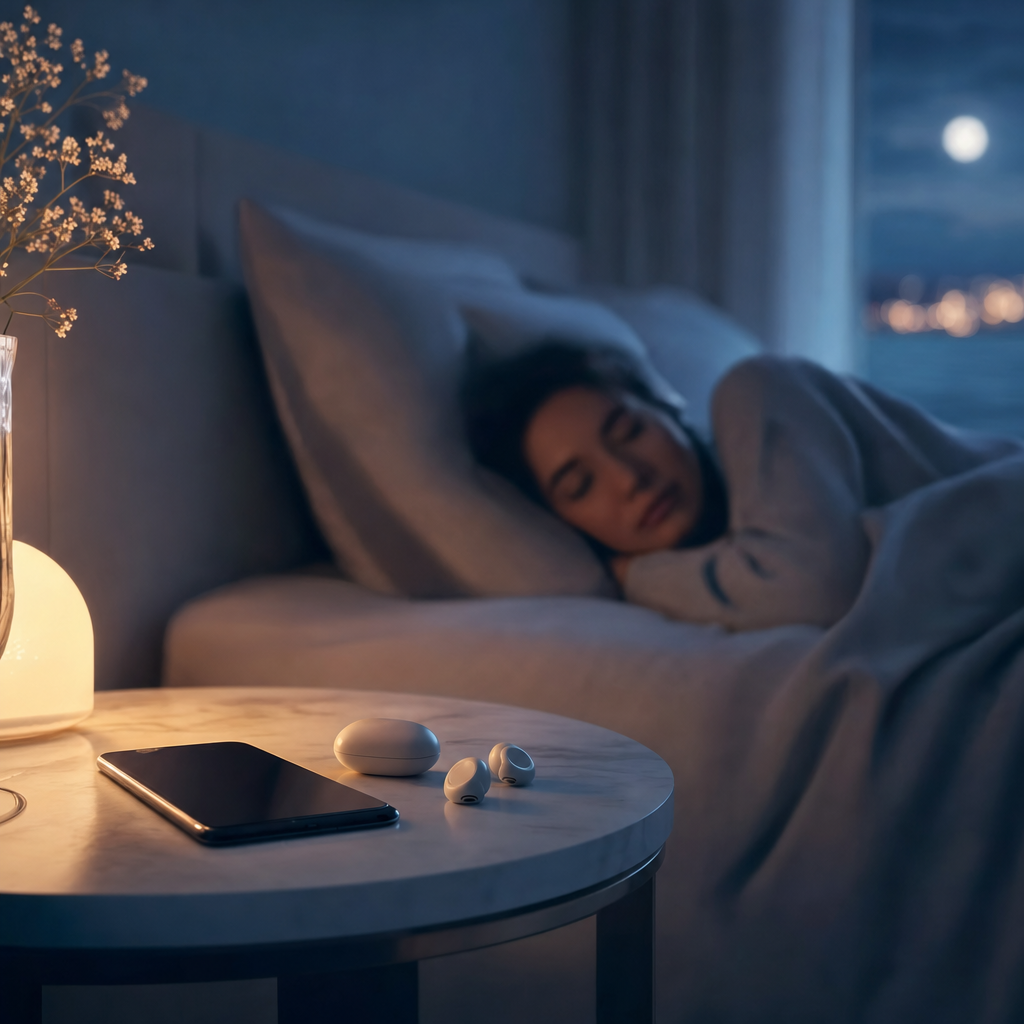
A soft bedside speaker is usually more comfortable for a full night. If you share a bed, sleep-friendly earbuds or a pillow speaker work well.