Sleep Meditation Music: Meditate Your Way Under
Sleep meditation music turns the last minutes of the day into a landing sequence. This guide covers how meditation before bed changes sleep, what music supports it, and a simple 10-minute practice.


- A short meditation before bed reliably lowers pre-sleep arousal — the main obstacle to falling asleep.
- Music for sleep meditation should be slow, spacious and stable: a soft anchor, not a performance.
- Body-scan and breath-counting are the two easiest pre-sleep practices, and both pair well with music.
- Yoga nidra — guided 'yogic sleep' — is the deepest form of meditative rest and has its own musical tradition.
- Consistency converts the practice into a conditioned sleep cue within two to three weeks.
Most people try to fall asleep the way they try to finish a task — by effort. Sleep meditation music supports the opposite move: a short practice that dissolves the effort itself, so sleep can do what it does naturally. Here is how meditation changes the approach to sleep, what music actually helps, and a 10-minute practice to start tonight.
What a pre-sleep meditation actually does
Falling asleep is not an action — it is what happens when vigilance drops low enough. A brief meditation lowers exactly that: heart rate eases, breath slows, the mental spotlight softens. Studies on mindfulness for insomnia consistently show improvements in how fast people fall asleep and how rested they feel — not because meditation sedates, but because it stops the holding-on.
The right music for meditating toward sleep
Meditation music for daytime focus can be too present for night. For sleep you want slow, spacious, harmonically stable sound — long warm tones, gentle movement, nothing to follow. It should behave like a soft floor under your attention. Our Yoga Nidra playlist is built for exactly this depth of rest, and pairs with the practice below.
A 10-minute practice: body scan into breath
“You do not meditate to fall asleep. You meditate to stop holding yourself awake.”
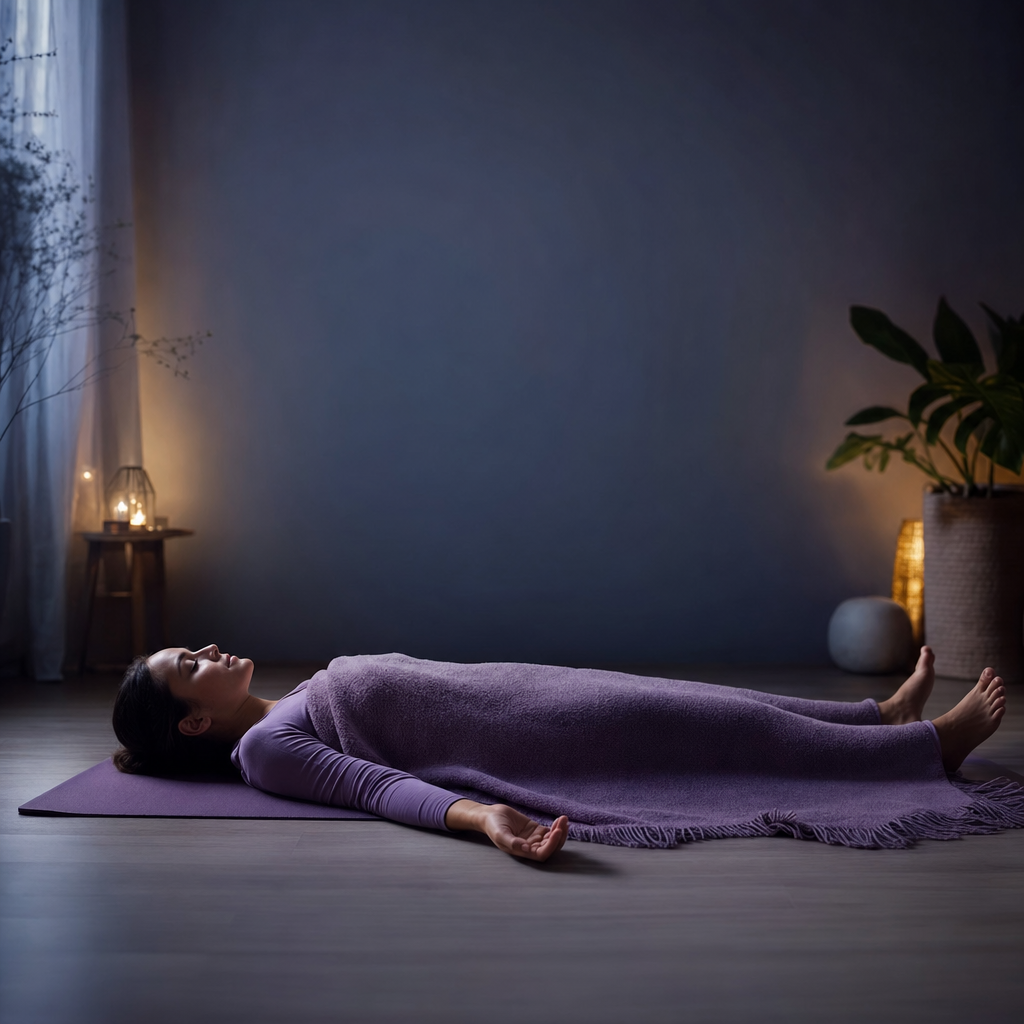
Lying in bed, music low: 1) Three long exhales — in through the nose for 4, out for 6. 2) Body scan: move attention slowly from toes to crown, letting each region soften on an exhale — about five minutes. 3) Breath counting: count exhales one to ten, then begin again; when you lose count (you will), that is the practice working, not failing. Most nights you will not finish the second round of ten.
Going deeper: yoga nidra
If you love this territory, yoga nidra — systematic 'yogic sleep' — is the deepest form of guided pre-sleep meditation, taking you to the edge between waking and sleep and holding you there. We wrote a full guide: yoga nidra music. For anxious minds specifically, see meditation music for anxiety.
Frequently asked questions
Is it OK to fall asleep during the meditation?
At night, that is the point. Daytime practice builds skill; night practice is allowed — encouraged — to dissolve into sleep.
Guided meditation or just music?
Start guided if you are new (the voice carries you), then graduate to music-only once the sequence is familiar. Music-only avoids waking slightly when a recording ends.
How loud should sleep meditation music be?
Barely there — the level of a quiet conversation or below. The music is an anchor for attention, not a focal point.