Best Binaural Beats for Deep Sleep: A Practical Guide
Looking for the best binaural beats for deep sleep? This guide explains which frequencies target deep sleep, what to look for in a track, and how to use them for more restorative nights.


- Deep sleep is linked to delta brainwaves (roughly 0.5–4 Hz), so deep-sleep binaural beats target that range.
- The best tracks are long, seamless, low and soft — no sudden changes to wake you.
- Headphones are needed for a true binaural effect, but soft delta soundscapes work without them.
- A comfortable overnight volume is low, so the sound fades into the background.
- Consistency beats novelty — the same track nightly becomes a reliable sleep cue.
If you want deeper, more restorative sleep, binaural beats tuned for deep sleep are a popular place to start. This guide explains which frequencies matter, what makes a good deep-sleep track, and how to use it for genuinely better nights.
What "deep sleep" binaural beats target
Deep, restorative sleep is dominated by delta brainwaves (roughly 0.5–4 Hz) — the slowest band, when the body does most of its physical repair. So deep-sleep binaural beats aim for the delta range, using two tones whose difference falls there. A track that eases you in through theta (4–8 Hz) first, then settles into delta, mirrors the natural descent into sleep.
What makes a good deep-sleep track
Long and seamless — no ads or sudden silence to jolt you in light sleep. Low and soft — gentle, warm tones rather than bright or busy sound. Steady — no dramatic changes. These are the same qualities behind our Delta Waves Deep Sleep playlist, which delivers the calming effect even without headphones.
How to use them
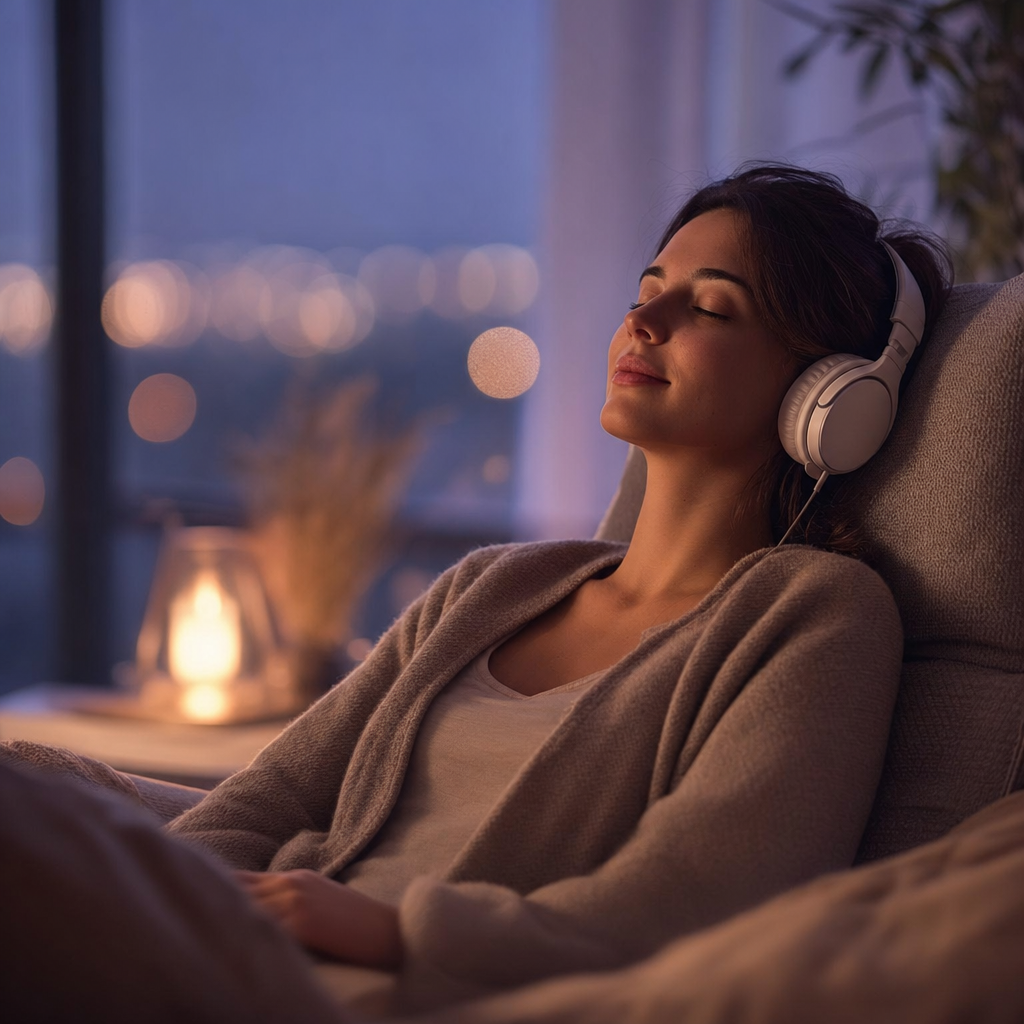
Use comfortable headphones for a true binaural effect (or a soft delta soundscape on a speaker), keep the volume low, start 20–30 minutes before bed, and stick with the same track so it becomes a sleep cue. For the fuller mechanics, see binaural beats for sleep.
The best binaural beats, by what you need tonight
If you struggle to fall asleep: choose a track that starts in the theta range (4–8 Hz) and glides down into delta over the first 20–30 minutes. The descent matters more than the destination — it gives your nervous system a ramp instead of a cliff.
If you wake at 3 a.m.: pick a long, pure delta track around 1–3 Hz that runs all night. Most mid-night waking happens between sleep cycles; steady sound masks the little noises that turn a surfacing into a full wake-up.
If you wake unrefreshed: prioritise the lowest end, 0.5–2 Hz, layered under warm, dark textures — this is the band most associated with slow-wave (physically restorative) sleep. Our Delta Waves Deep Sleep playlist lives here.
If headphones annoy you in bed: skip strict binaural beats entirely (they need stereo separation to work) and use a delta-weighted soundscape on a speaker. You lose the beat effect but keep the slow, low, steady qualities that do most of the practical work.
Brainwave bands at a glance
| Band | Range | Associated with | Use it for |
|---|---|---|---|
| Delta | 0.5–4 Hz | Deep, dreamless, restorative sleep | All-night listening |
| Theta | 4–8 Hz | Drowsiness, light sleep, dreaming | The wind-down before bed |
| Alpha | 8–12 Hz | Relaxed wakefulness | Evening reading, not sleep itself |
The carrier tone matters as much as the beat
“The best track is not the one with the cleverest frequency. It is the one you will actually press play on every single night.”
A binaural beat is the difference between two tones — a 200 Hz tone in one ear and a 202 Hz tone in the other produces a 2 Hz beat. That base pitch (the carrier) is what you actually hear, and for sleep it should be low and warm: carriers between roughly 100 and 250 Hz feel like a hum; carriers above 400 Hz start to feel bright and present, which is the opposite of what you want at 2 a.m. If a "deep sleep" track sounds shrill, the beat frequency cannot save it.
What the science honestly says
Research on binaural beats and sleep is genuinely mixed: some small studies find faster sleep onset and reduced anxiety, others find no effect beyond relaxing music in general. What is well established is that slow, steady, familiar sound lowers arousal and masks disturbances — and that consistency turns any track into a conditioned sleep cue. So treat binaural beats as a comfortable ritual with a plausible bonus, not a medical device. If they get you to put the phone down and press play at the same time every night, they are already working.
A simple nightly protocol
1) Same track, same time, every night. 2) Start it 20–30 minutes before you want to be asleep. 3) Volume low enough that you could ignore it. 4) If you use headphones, flat sleep-friendly ones — or switch to a speaker and accept the soundscape version. 5) Give it two weeks before judging; conditioning is the mechanism, and conditioning takes repetitions.
Frequently asked questions
What frequency is best for deep sleep?
The delta range (0.5–4 Hz) is associated with deep sleep, so deep-sleep binaural beats target it. What matters most is that the track is slow, low and continuous.
Are binaural beats or soundscapes better for deep sleep?
Both work. Binaural beats need headphones for the true effect; soft delta soundscapes work on a speaker. The best choice is whichever you will use consistently and comfortably.
How long should I listen for deep sleep?
Start 20–30 minutes before bed and let it continue as you fall asleep. A long, seamless track avoids waking you later.
Can binaural beats give me more deep sleep?
They may help you fall asleep more easily by relaxing you; whether they directly increase deep-sleep time is not firmly proven. Good sleep habits — cool, dark room, consistent schedule — matter most.
Do binaural beats work through speakers?
The beat effect itself needs headphones — each ear must receive its own tone. On a speaker the two tones blend in the air, so you get a pleasant low soundscape instead. That is still useful for sleep; it is just not technically binaural.
Are binaural beats safe to use every night?
For most people, yes — it is simply audio at low volume. Keep the volume modest to protect your hearing overnight, and if you have epilepsy or a seizure history, check with your doctor first, as rhythmic stimulation is worth clearing.