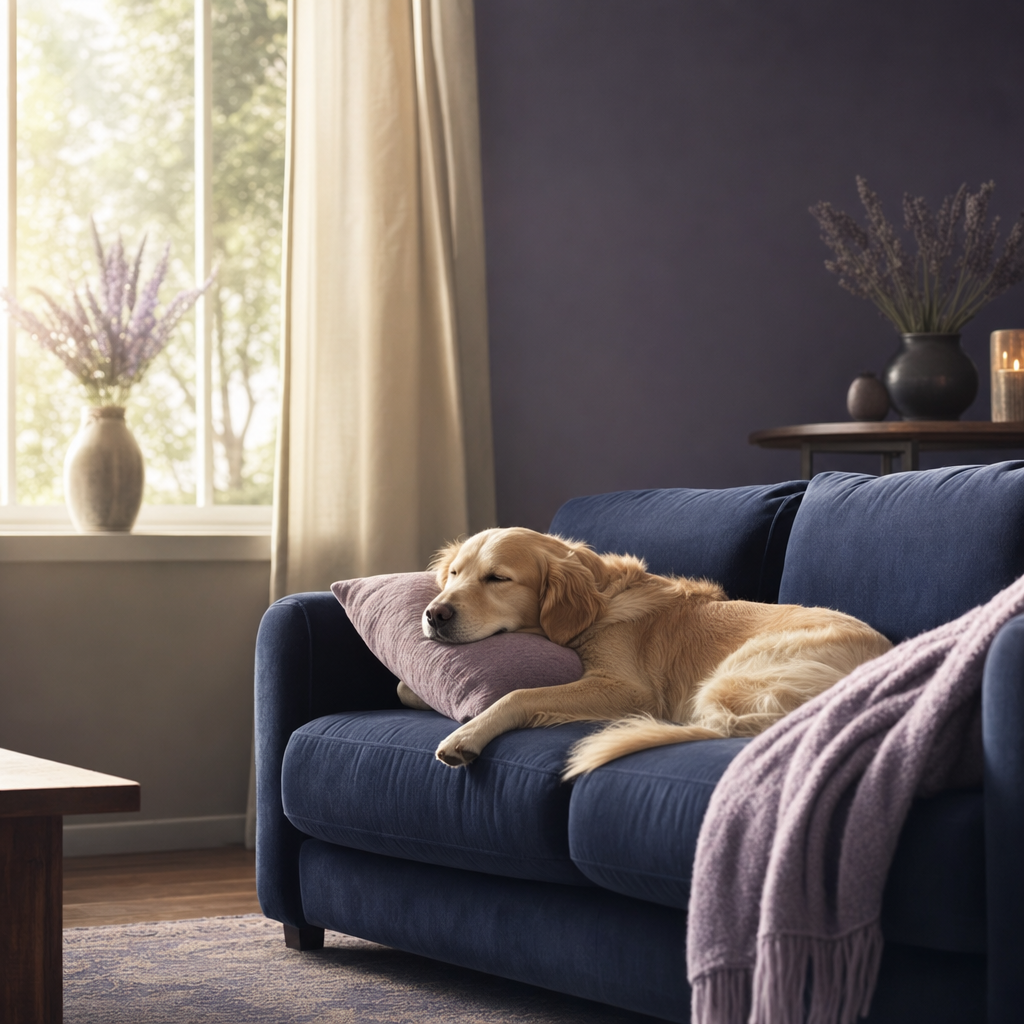
Calming Music for Dogs: What Works and Why
Calming music can lower a dog’s heart rate, reduce barking and help an anxious pup settle. This guide covers what makes music soothing for dogs, when to use it, and how to build it into a calmer daily routine.


- Calming music lowers arousal in dogs, reducing barking, pacing and restlessness.
- Slow, soft, lyric-free music around a resting heart-rate tempo works best.
- Dogs hear a wider range than we do, so gentle, low, non-startling sound matters even more for them.
- Music helps with everyday stress, thunderstorms, fireworks, car trips and vet visits.
- Used consistently, calm music becomes a routine cue that tells your dog it is time to settle.
Calming music for dogs is one of the easiest ways to help an anxious or over-excited dog settle — and it works for far more than separation anxiety. This guide explains what actually makes music soothing to a dog, the situations it helps most, and how to use it as part of a calmer routine.
Why calming music works for dogs
Dogs are highly sensitive to sound — they hear a wider frequency range than we do and pick up noises we miss. That is exactly why the right music helps: soft, steady, low music masks startling sounds and gives the environment a calm, predictable texture. As arousal drops, so does the barking, pacing and whining.
The best calming dog music is slow (around a resting heart rate), soft, and lyric-free, with no sudden changes. That is how our 432 Hz Dog Music playlist is built — gentle healing frequencies made to soothe, not stimulate.
When to use it
Everyday calm
Play it in the background during the day to keep a busy or reactive dog on an even keel — especially in noisy homes or apartments.
Storms and fireworks
Loud, unpredictable noise is terrifying for many dogs. Calming music at a comfortable volume helps mask the bangs and gives your dog something steady to anchor to. (For anxiety specifically, see our guide to music for dog anxiety.)
Travel and vet visits
Car rides and waiting rooms are common stress triggers. Familiar calm music turns an unfamiliar, scary place into something a little more like home.
How to make it part of the routine
“A dog cannot decide to relax. But you can build a world around them where relaxing is the easiest thing to do.”
Keep the volume low, pick one calm playlist and use it consistently, and pair music with the calm signals your dog already knows — a settle mat, a chew, dim lights. Over time the music itself becomes a cue to relax.
Frequently asked questions
Does calming music really work on dogs?
Yes. Soft, slow music lowers arousal and masks startling noises, which reduces barking, pacing and restlessness. It is one of the most recommended, lowest-effort tools for a calmer dog.
What is the most calming music for dogs?
Slow, soft, lyric-free music without sudden changes — gentle classical or calm 432 Hz pet soundscapes. Avoid loud, fast or busy music.
Can I play calming music for my dog every day?
Absolutely. Daily calm music at a low volume is a great habit, especially for anxious or reactive dogs. Consistency turns it into a reliable settle cue.
Is 432 Hz music good for dogs?
432 Hz music is warm, low and gentle, which suits a dog’s sensitive hearing. Many owners find these soft frequencies especially effective for relaxation.